





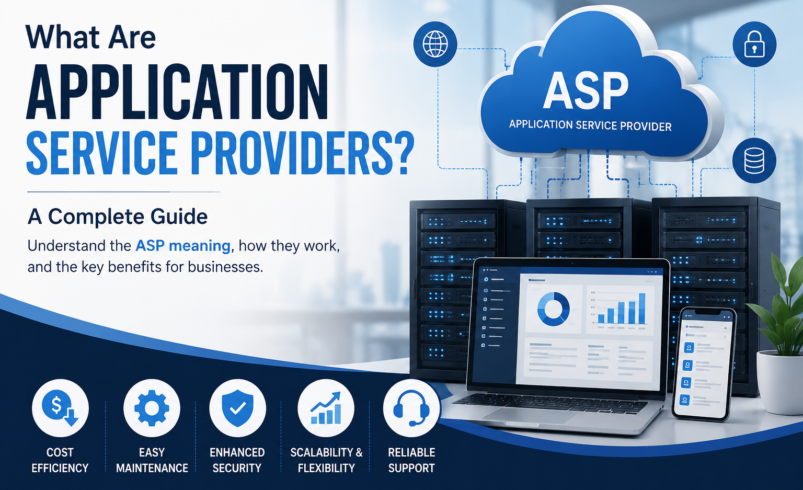

Businesses constantly seek efficient ways to deploy and manage software without the burden of extensive in-house IT infrastructure. This pursuit often leads them to explore models like the Application Service Provider (ASP). Understanding what are application service providers is crucial for organizations aiming to streamline their software operations, reduce costs, and focus on core competencies. ASPs represent a significant shift in how software is delivered and consumed, offering a distinct approach to technology management.
What Exactly Are Application Service Providers?
An Application Service Provider (ASP) is a business that provides computer-based services to customers over a network. Essentially, an ASP owns, operates, and maintains software applications and the servers on which they run, then makes these applications available to customers via the internet or a private network. The fundamental ASP meaning revolves around the concept of delivering software as a service rather than a product that a customer purchases and installs locally.
Historically, ASPs emerged as a solution to the complexities and high costs associated with traditional software licensing, installation, and maintenance. Before the widespread adoption of cloud computing, ASPs offered a way for businesses, particularly small and medium-sized enterprises (SMEs), to access sophisticated software without significant upfront investment in hardware, software licenses, or IT personnel. They pioneered the idea of remote software access and management, laying groundwork for later models.
The Core Concept: Software as a Service, Not a Product
The defining characteristic of an ASP is its focus on delivering software as a service. Instead of buying a software license and installing the application on their own servers or workstations, clients subscribe to use the software hosted by the ASP. This subscription typically involves a recurring fee, which grants access to the application, its underlying infrastructure, and often includes maintenance and support. The client interacts with the software through a web browser or a dedicated client application, with all processing and data storage handled remotely by the ASP.
How Do Application Service Providers Work?
The operational model of an ASP is designed to abstract away the complexities of software management from the end-user. To understand how do application service providers work, it’s helpful to consider the infrastructure and service layers they manage.
At its core, an ASP maintains a robust data center environment where the applications are hosted. This includes servers, storage, networking equipment, and security systems. Clients connect to these applications over the internet or a dedicated connection, accessing them as if they were running locally, but without the local resource consumption.
Managed Application Hosting and Infrastructure
A key component of an ASP’s offering is managed application hosting. This means the ASP is responsible for the entire technology stack required to run the application. This includes:
- Hardware Management: Procuring, installing, and maintaining servers, storage arrays, and network devices.
- Operating System Management: Installing, patching, and updating the operating systems on the servers.
- Database Management: Setting up, optimizing, backing up, and maintaining databases used by the applications.
- Application Management: Installing, configuring, updating, and patching the software applications themselves.
- Security: Implementing firewalls, intrusion detection systems, antivirus software, and conducting regular security audits.
- Performance Monitoring: Ensuring applications run optimally and addressing performance bottlenecks.
For clients, this translates to offloading significant IT responsibilities, allowing them to focus on using the software for business operations rather than managing its underlying technology.
Outsourced Software Solutions and Support
Beyond hosting, ASPs provide comprehensive outsourced software solutions. This typically encompasses:
- Maintenance and Updates: The ASP handles all software updates, patches, and version upgrades, ensuring clients always have access to the latest features and security fixes without manual intervention.
- Backup and Disaster Recovery: Data backups are performed regularly, and disaster recovery plans are in place to ensure business continuity in case of outages.
- Technical Support: Clients receive support for application usage, troubleshooting, and resolving technical issues directly from the ASP’s support team.
- Scalability: ASPs can often scale resources (e.g., CPU, RAM, storage) up or down based on client demand, providing flexibility without requiring clients to invest in excess capacity.
Key Benefits of Application Service Providers
Adopting an ASP model offers several compelling advantages for businesses. The benefits of application service providers often translate into operational efficiencies and strategic advantages.
Advantages of the ASP Model for Businesses
The advantages of ASP model are numerous and impactful:
- Reduced Upfront Costs: Instead of large capital expenditures for software licenses and hardware, businesses pay a predictable subscription fee, converting CapEx to OpEx.
- Faster Deployment: Applications are already hosted and configured, allowing businesses to get up and running much quicker than with traditional on-premise installations.
- Lower IT Burden: The ASP manages all infrastructure, maintenance, and updates, significantly reducing the need for in-house IT staff dedicated to software management.
- Access to Specialized Software: Smaller businesses can access enterprise-grade applications that would otherwise be cost-prohibitive or too complex to manage.
- Predictable Budgeting: Monthly or annual subscription fees make IT budgeting simpler and more transparent.
- Scalability and Flexibility: Resources can be easily scaled to meet changing business needs, accommodating growth or fluctuating demand without major infrastructure changes.
- Enhanced Security and Reliability: ASPs often have dedicated security teams and robust data centers, providing a higher level of security and uptime than many individual businesses could achieve.
Potential Disadvantages of ASPs
While the ASP model offers many advantages, it also comes with certain considerations. Understanding the disadvantages of ASP is crucial for a balanced decision.
- Reliance on Internet Connectivity: Access to applications is entirely dependent on a stable internet connection. Downtime can halt operations.
- Customization Limitations: ASP applications are often standardized to serve multiple clients, which can limit the extent of customization possible to fit unique business processes.
- Vendor Lock-in: Migrating data and applications from one ASP to another can be complex and costly, potentially leading to vendor lock-in.
- Data Security and Privacy Concerns: While ASPs invest heavily in security, entrusting sensitive data to a third party always carries inherent risks and requires careful due diligence regarding compliance and data protection policies.
- Performance Issues: Network latency or shared resource contention on the ASP’s infrastructure can sometimes lead to performance degradation.
- Lack of Direct Control: Businesses have less direct control over the software environment, update schedules, and underlying infrastructure.
SaaS vs. ASP: Understanding the Nuances
The terms ASP and SaaS are often used interchangeably, but there are subtle yet important distinctions. SaaS vs ASP primarily comes down to evolution and scope.
An ASP is a *provider* that delivers applications over a network. SaaS (Software as a Service) is a *delivery model* where software is licensed on a subscription basis and centrally hosted. While all SaaS offerings are delivered by providers, not all ASPs strictly adhere to the modern, multi-tenant architecture often associated with SaaS. Early ASPs might have hosted individual instances of software for each client, whereas modern SaaS typically uses a single instance of the application serving multiple customers (multi-tenancy).
In essence, SaaS is a refined and often more scalable evolution of the ASP concept, leveraging multi-tenancy and web-native architectures to deliver software more efficiently. Many modern ASPs effectively operate as SaaS providers.
Cloud Services vs. ASP: A Clear Distinction
It’s also important to differentiate between ASPs and broader cloud computing services. The distinction between cloud services vs ASP lies in their scope and focus.
Cloud services encompass a much wider range of offerings, including Infrastructure as a Service (IaaS), Platform as a Service (PaaS), and Software as a Service (SaaS). IaaS provides virtualized computing resources (servers, storage, networks), PaaS offers a platform for developing, running, and managing applications, and SaaS delivers ready-to-use software.
An ASP, by definition, is focused specifically on delivering and managing *applications*. While an ASP might utilize cloud services (like IaaS or PaaS) to host its applications, the ASP itself is a specialized type of service provider within the broader cloud ecosystem. Not all cloud service providers are ASPs, but many modern ASPs leverage cloud infrastructure to deliver their services.
Application Service Provider Examples in Practice
To illustrate the concept, consider various application service provider examples:
- Enterprise Resource Planning (ERP) ASPs: Companies that host and manage ERP software (e.g., SAP, Oracle, Microsoft Dynamics) for clients, allowing businesses to access their financial, HR, and supply chain modules via a web browser.
- Customer Relationship Management (CRM) ASPs: Providers offering hosted CRM solutions (e.g., Salesforce, HubSpot) where businesses manage customer interactions, sales, and marketing activities without owning the software.
- Email and Collaboration ASPs: Services like Microsoft 365 or Google Workspace, which provide hosted email, document creation, and collaboration tools. While often categorized as SaaS, they function as ASPs by managing the entire application stack.
- Accounting Software ASPs: Companies offering hosted accounting platforms (e.g., QuickBooks Online, Xero) that allow businesses to manage their finances remotely.
- Vertical-Specific ASPs: Providers specializing in applications for particular industries, such as healthcare practice management software, legal case management systems, or real estate listing services, all delivered as a hosted service.
Difference Between ASP & SaaS model
While closely related, the ASP and SaaS models have distinct characteristics, particularly in their historical context and technical implementation. Here’s a summary of their key differences:
| Feature | Application Service Provider (ASP) | Software as a Service (SaaS) |
|---|---|---|
| Primary Focus | Providing access to hosted applications (often single-tenant or customized instances). | Delivering standardized, multi-tenant software over the internet. |
| Architecture | Could be single-tenant (separate instance per client) or multi-tenant. Often involved client-server applications accessed remotely. | Primarily multi-tenant (single instance serves multiple clients). Web-native. |
| Evolution | Earlier model, often a precursor to modern SaaS. Focused on outsourcing software management. | More modern evolution, leveraging cloud infrastructure and web technologies. |
| Customization | Potentially more customization for individual clients, especially with single-tenant setups. | Generally less customization, but configurable options are common. |
| Scalability | Scalability can be more complex, especially with single-tenant instances. | Highly scalable due to multi-tenant architecture and cloud foundations. |
| Updates/Maintenance | Managed by provider, but might involve more client-specific coordination. | Seamless, automatic updates for all users from a single codebase. |
| Cost Model | Subscription-based, often with setup fees for customization. | Subscription-based, typically pay-as-you-go, often with tiered pricing. |
Frequently Asked Questions About Application Service Providers
What is the primary function of an ASP?
The primary function of an Application Service Provider (ASP) is to host, manage, and deliver software applications to clients over a network, typically the internet. This allows clients to use the software without needing to install, maintain, or update it on their own infrastructure. The core ASP meaning is to provide software as a service, handling all the technical complexities on behalf of the user.
Conclusion: The Enduring Role of Application Service Providers
Application Service Providers have played a pivotal role in shaping how businesses consume software. By offering outsourced software solutions and managed application hosting, ASPs enable organizations to access powerful applications without the significant capital expenditure and operational overhead of traditional software deployment. While the landscape has evolved with the rise of SaaS and broader cloud computing, the fundamental value proposition of what are application service providers remains relevant: delivering efficient, accessible, and expertly managed software solutions. For businesses seeking to optimize their IT resources and focus on strategic initiatives, the ASP model continues to offer a compelling path forward.