

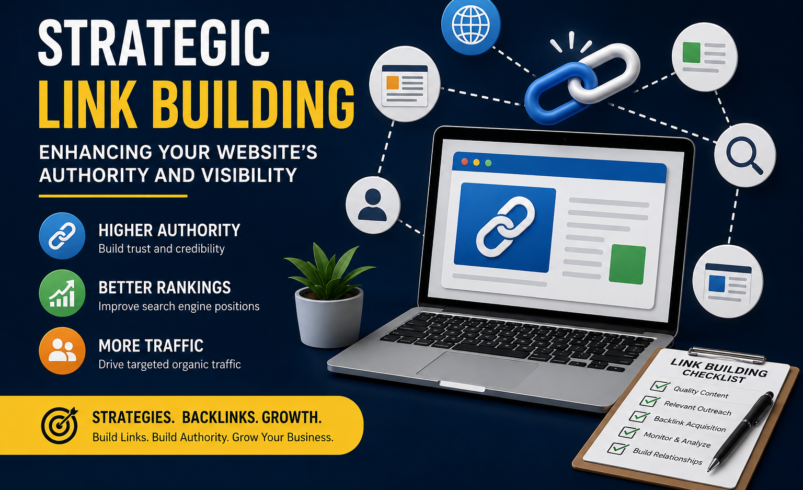

For any website aiming for prominence in search engine results, the practice of building link stands as a fundamental pillar of search engine optimization (SEO). It is not merely about acquiring external connections; it is a strategic endeavor that significantly influences a site’s credibility, visibility, and overall digital presence. Understanding and implementing effective link acquisition is crucial for achieving sustained online success and outranking competitors.
The Anatomy of a Quality Backlink: What Modern Search Engines Look For
Not all backlinks pass equal equity (often referred to historically as “Link Juice”). In recent SEO, search engine algorithms like Google’s Spam Brain and neural matching models evaluate the quality of incoming links based on several distinct criteria:
- Topical Relevance & Context: A link from a niche-relevant site in your exact industry carries far more ranking weight than a link from a generic, unrelated high-authority site. Contextual placement within the main body text (editorial links) strongly outperforms footer, sidebar, or author bio placements.
- Link Attributes and Follow Status: Standard follow links pass PageRank and equity. REL attributes such as rel=”nofollow”, rel=”sponsored”, and rel=”ugc” (User-Generated Content) provide search engines with contextual hints about the relationship between pages.
- Referring Domain Organic Traffic: A link from a page that generates real organic traffic and ranks for its own set of keywords is exponentially more valuable than a link from a page with zero organic visibility.
- Anchor Text Distribution: Natural anchor text profiles balance branded names, exact match terms, partial match phrases, topical synonyms, and generic phrasing to avoid over-optimization filters.
Understanding What is Link Building
At its core, what is link building? It is the process of acquiring hyperlinks from other websites to your own. These hyperlinks, often called backlinks, act as votes of confidence from one site to another. Search engines like Google interpret these votes as indicators of your content’s value, relevance, and authority. A robust and natural backlink profile signals to search engines that your website is a trusted and valuable resource, meriting higher placement in search results.
The Core Benefits of Link Building for SEO Success
A well-executed strategy for building link offers numerous advantages that directly contribute to a website’s overall SEO performance. The cumulative effect of quality backlinks can transform a site’s standing in competitive online environments, making SEO link building an indispensable activity.
How Links Improve Website Authority and Trust
One of the most significant advantages of acquiring high-quality backlinks is how they improve website authority with links. When reputable and relevant websites link to your content, it signals to search engines that your site is a credible source of information. This accumulation of trust and authority, often measured by metrics like Domain Authority or Domain Rating, is a critical factor in how search engines rank pages. The stronger your authority, the more likely your content is to rank for competitive keywords.
Boosting Search Engine Rankings and Organic Traffic
The direct correlation between a strong backlink profile and higher search engine rankings is well-documented. Websites with more high-quality backlinks tend to appear higher in search results, which in turn leads to increased organic traffic. Learning how to get backlinks effectively translates into more visitors discovering your site through search engines, expanding your reach without direct advertising spend.
Driving Referral Traffic and Brand Exposure
Beyond SEO benefits, building link also drives valuable referral traffic. When users click on a link from another website to yours, they are directly referred to your content. This traffic is often highly qualified, as the referring site has already established relevance. Furthermore, strategic link placements on influential sites provide significant brand exposure, introducing your brand to new audiences and reinforcing its presence within your industry.
Effective Link Building Strategies for Sustainable Growth
To achieve lasting SEO benefits, businesses must employ diverse and ethical link building strategies. These approaches focus on earning, rather than simply acquiring, valuable backlinks. Implementing effective link building tips ensures that efforts are aligned with search engine guidelines and yield long-term results.
Content-Based Link Acquisition: Earning Backlinks Naturally
One of the most organic ways to how to get backlinks is through creating exceptional content. High-quality, informative, and unique content—such as in-depth guides, original research, compelling infographics, or useful tools—naturally attracts links from other websites. When your content provides genuine value, other sites will link to it as a resource, establishing a strong foundation for your backlink profile.
High-Converting Linkable Asset Formats
To attract editorial links consistently at scale, focus your content development on formats proven to function as “link magnets”:
- Proprietary Industry Data & Benchmarks: Survey data, original research, and proprietary platform statistics that writers and journalists cite when covering your industry.
- Interactive Web Tools & Calculators: Simple, high-utility JavaScript tools (e.g., ROI calculators, conversion estimators, or assessment templates) that serve as perennial reference tools across industry forums and blogs.
- Comprehensive Definitive Guides: Deep-dive Pillar Pages that thoroughly explain complex mechanisms or frameworks, making them the default citation for other writers.
- Infographics & Data Visualizations: High-density visual representations of complex topics or industry stats that bloggers embed with an attribution link.
Strategic Outreach and Relationship Building
Proactive outreach is a cornerstone of successful building link efforts. This involves identifying relevant websites, bloggers, journalists, and industry influencers who might be interested in your content or services. Building genuine relationships with these individuals can lead to opportunities for guest posting, content collaborations, or simply having them link to your valuable resources. Personalized and respectful communication is key to successful outreach.
Proven Outreach Framework & Cold Pitch Templates
Successful email outreach relies on personalization, brevity, and a clear value proposition. Below is a battle-tested template for resource-based outreach:
Subject: Resource suggestion for your [Article Topic] guide
Hi [First Name],
I was reading your piece on [Topic/Title] and found your section on [Specific Subtopic] especially useful.
We recently published an original study analyzing [Unique Data Point/Asset], which includes breakdown data on [Specific Insight]. Thought it might make a strong companion reference for your readers looking into [Target Problem].
Here is the link if you’d like to check it out: [URL]
Either way, keep up the great work!
Best regards,
[Your Name]
Best Practices for Outreach Deliverability:
- Authenticate your outreach email domain using SPF, DKIM, and DMARC records.
- Warm up email accounts gradually, capping cold sends at 30–50 targeted emails per inbox per day.
- Send a single polite follow-up 4 to 5 business days after the initial contact if no reply is received.
Implementing White Hat Link Building Techniques
Adhering to white hat link building techniques is paramount for sustainable SEO. These methods comply with search engine guidelines and focus on earning links through legitimate means, such as creating valuable content, ethical outreach, and fostering genuine relationships. Avoiding manipulative tactics like buying links, excessive link exchanges, or using automated link schemes protects your site from penalties and ensures long-term ranking stability.
White Hat vs. Grey Hat vs. Black Hat Link Strategies
| Strategy Type | Core Methods | Google Guidelines Compliance | Risk Profile | Sustainability |
| White Hat | Digital PR, linkable assets, original data, resource outreach, broken link reclamation. | Fully Compliant | Zero Risk | Long-term growth and stable rankings. |
| Grey Hat | Paid guest post placements without sponsored tags, 2-way / 3-way link exchanges, high-tier expired domains. | Borders Non-Compliance (Violates Link Spam Policies) | Moderate Risk (Algorithmic devaluation or manual review) | Unpredictable; vulnerable to core algorithm updates. |
| Black Hat | Private Blog Networks (PBNs), automated forum/comment spam, hacked/injected links, mass link buying schemes. | Direct Violation | Severe Risk (Algorithmic demotion or Manual Penalty/De-indexing) | Short-lived; leads to permanent domain damage. |
Broken Link Building and Resource Page Opportunities
Two practical link building strategies involve identifying broken links on other websites and suggesting your relevant content as a replacement. This provides value to the website owner by fixing a broken link and earns you a backlink. Similarly, finding resource pages within your niche that list helpful external links presents an opportunity to suggest your own high-quality content for inclusion, provided it genuinely enhances their resource list.
Advanced Link Acquisition Tactics for High-Authority Placements
- Digital PR & Data-Driven Storytelling: Crafting press releases and pitch packages centered around proprietary data, FOIA requests, or industry surveys, and pitching them directly to journalists and editors at major publications (e.g., Forbes, Business Insider, top-tier industry trades).
- Unlinked Brand Mention Reclamation: Using media monitoring tools (like Brand24, Google Alerts, or BuzzSumo) to locate web publications that cite your company, brand, or research without linking back. Reaching out with a friendly note requesting attribution yields some of the highest outreach conversion rates.
- Expert Sourcing Platforms: Active participation on journalist response networks (such as Connectively, SourceBottle, and Qwoted) to provide expert quotes, technical insights, and commentary in exchange for editorial citations.
- The Skyscraper Technique 2.0: Identifying top-ranking URLs with substantial backlink profiles, producing a significantly more current, visually appealing, or comprehensive version, and reaching out to the domains currently linking to the outdated piece.
Tailored Link Building for Small Businesses
For link building for small businesses, resource constraints often necessitate a focused approach. Prioritizing local SEO is crucial; this includes securing links from local directories, community websites, and local news outlets. Engaging with local influencers and participating in community events can also create organic link opportunities. Focusing on niche-specific content that appeals to a local audience can also attract relevant backlinks without requiring extensive budgets.
The Strategic Role of Internal Linking in Equity Distribution
External link building works best in tandem with a robust internal linking architecture:
- Distribute Link Equity: Backlinks frequently point to informational guides, studies, or homepages. Use contextual internal links to direct equity from these high-authority hub pages to your commercial and service conversion pages.
- Establish Clear Topical Clusters: Group semantically related articles together around a main pillar page. Consistent internal linking reinforces your site’s topical authority and helps search engines understand content hierarchies.
- Optimize Internal Anchor Text: While external anchor text must remain strictly varied, internal anchor text can be descriptive and target-rich to provide precise signals about page intent without risk of search penalties.
Essential Tool Stack for Professional Link Building
- Backlink Auditing & Competitor Prospecting: Ahrefs, Semrush, Moz Pro, Majestic SEO.
- Email Discovery & Verification: io, NeverBounce, Voila Norbert, Anymail Finder.
- Outreach Campaign Management: Pitchbox, BuzzStream, Mailshake, Woodpecker.
- Brand Monitoring & PR Intelligence: BuzzSumo, Brand24, Google Alerts, Talkwalker.
Key Tips for Successful Link Building Campaigns
To maximize the impact of your link acquisition efforts, consider these effective link building tips:
- Focus on Quality Over Quantity: A few high-authority, relevant links are far more valuable than many low-quality, spammy ones.
- Relevance is Key: Ensure that links come from websites related to your industry or content.
- Vary Anchor Text: Use a natural mix of branded, exact-match, partial-match, and generic anchor text to avoid appearing manipulative.
- Monitor Your Backlink Profile: Regularly review your backlinks to identify and disavow any harmful or spammy links.
- Be Patient and Consistent: Link building is a long-term strategy; consistent effort yields gradual but significant results.
Step-by-Step Link Building Execution Checklist
- [ ] Step 1: Audit Your Current Profile – Benchmark referring domains, toxic link risks, and baseline Domain Rating/Authority metrics.
- [ ] Step 2: Conduct Competitor Gap Analysis – Identify domains linking to 2 or more of your top organic competitors that do not currently link to you.
- [ ] Step 3: Create Linkable Assets – Publish data studies, interactive tools, or authoritative guides targeting informational search queries.
- [ ] Step 4: Build & Qualify Prospect Lists – Filter prospect domains to ensure they have real organic traffic (e.g., >1,000 monthly visits) and tight topical relevance.
- [ ] Step 5: Run Personalized Outreach – Send tailored, value-first email pitches with automated, single-cadence follow-ups.
- [ ] Step 6: Track Placements & Monitor Link Velocity – Measure live link acquisitions, monitor 404 drops, and route link equity through updated internal links.
Frequently Asked Questions About Building Link
What is link building and why is it important?
What is link building refers to the process of acquiring hyperlinks from other websites to your own. It’s crucial because these links act as votes of confidence, signaling to search engines that your site is a valuable and authoritative resource, which helps improve search rankings and organic traffic.
How long does it take to see results from building link?
The timeline for seeing results from building link varies significantly based on industry competitiveness, the quality of links acquired, and the overall SEO health of your site. Generally, it can take anywhere from a few months to over a year to observe substantial ranking improvements and increased organic traffic.
Is buying links advisable for how to get backlinks?
No, buying links is generally not advisable. It violates search engine guidelines and is considered a black hat SEO technique. While it might offer short-term gains, it carries a high risk of penalties, which can severely damage your website’s search engine visibility and authority. Focus on earning links through valuable content and ethical outreach instead of trying to how to get backlinks via paid means.
What is the difference between Domain Authority (DA) and PageRank?
PageRank is an official, foundational algorithm developed by Google to evaluate the authority of a webpage based on the volume and quality of links pointing to it. Domain Authority (DA) and Domain Rating (DR) are proprietary third-party metrics developed by SEO platforms like Moz and Ahrefs. Search engines do not use DA or DR in their ranking algorithms; these metrics are simply estimations created to help marketers benchmark link equity.
When should you use Google’s Disavow Tool?
Google’s automated spam algorithms (like SpamBrain) automatically ignore the vast majority of low-quality or scraping backlinks. According to official Google Search Central guidelines, the Disavow Tool should only be used if your site has received a Manual Action for unnatural links, or if you have an extensive history of paid or manipulative link schemes that could trigger a penalty.
What is link velocity and does it affect SEO?
Link velocity refers to the speed and frequency at which your website gains or loses backlinks over time. A natural link velocity mirrors gradual, steady site growth. Sudden, abnormal spikes in backlink volume-especially from low-quality or irrelevant sources-can trigger algorithmic review for unnatural link manipulation.
Conclusion: Prioritizing Building Link for Long-Term SEO Success
The strategic practice of building link remains a cornerstone of successful SEO. By understanding what is link building, embracing ethical white hat link building techniques, and consistently applying effective link building tips, businesses can significantly enhance their online visibility. Prioritizing SEO link building is not a one-time task but an ongoing commitment that drives improved rankings, increased organic traffic, and sustained digital growth. For any website aiming to thrive online, a robust and healthy backlink profile is an indispensable asset.

