



Understanding your competitive landscape is fundamental for any business aiming for sustainable growth and market leadership. Knowing how to find your competitors provides critical insights into market trends, customer expectations, and potential strategic advantages. This knowledge allows businesses to refine their offerings, identify market gaps, and make informed decisions that drive success. This article outlines comprehensive methods for identifying and analyzing your business rivals, from direct competitors to broader market influences, equipping you with the strategies to maintain a competitive edge.
Why Understanding Your Competition is Crucial
A thorough understanding of your competition is not merely about knowing who else operates in your space; it’s a strategic imperative. By analyzing competitors, businesses can identify unmet customer needs, refine their unique value proposition, and anticipate market shifts. This proactive approach helps in developing more robust marketing strategies, optimizing product development, and ultimately improving overall business performance. It allows you to learn from others’ successes and failures, mitigating risks and capitalizing on opportunities.
Identifying Your Business Rivals
To effectively compete, you must first understand who you are competing against. This involves recognizing different categories of businesses that vie for your target audience’s attention and resources. Learning how to identify business rivals is the foundational step in any strategic planning.
Pinpointing Direct Competitors
Direct competitors are businesses that offer similar products or services to the same target audience, often solving the same customer problem in a comparable way. Identifying these rivals is typically the most straightforward part of competitor analysis. Practical methods to identify direct competitors include:
- Search Engine Queries: Perform searches for your primary product or service keywords. The businesses appearing in the top results are often your direct competitors.
- Industry Directories and Associations: Many industries have online directories or professional associations that list businesses operating within that sector.
- Customer Feedback: Ask your customers who else they considered before choosing your product or service. This provides direct insight into their decision-making process.
- Trade Shows and Conferences: Attending industry events reveals who else is showcasing similar offerings.
Uncovering Indirect Competitors
While direct competitors are obvious, indirect competitors are equally significant. These are businesses that solve the same customer problem but with different products or services. For example, a cinema’s indirect competitors might include streaming services, bowling alleys, or restaurants, all vying for a customer’s entertainment budget. Strategies to find indirect competitors involve:
- Brainstorming Alternative Solutions: Consider all possible ways a customer could solve the problem your business addresses.
- Broader Market Trend Analysis: Look at adjacent industries or emerging technologies that could offer substitute solutions.
- Customer Behavior Analysis: Understand what alternatives customers consider when they don’t choose your primary offering.
Local Competitor Analysis Strategies
For businesses with a defined geographic footprint, local competitor analysis requires specific approaches. Whether you operate a restaurant, a retail store, or a service-based business, understanding your immediate neighborhood competition is vital:
- Local Search Engine Results: Use location-specific searches (e.g., “coffee shop near me”). Google Maps and other local directories are invaluable.
- Physical Observation: Walk or drive around your business location. Note other businesses offering similar or substitute services.
- Community Engagement: Participate in local business groups, chambers of commerce, and community events. This provides networking opportunities and insights into local market dynamics.
- Local Review Sites: Platforms like Yelp, TripAdvisor, or local business directories often highlight local competitors and customer sentiment.
Effective Competitor Research Methods
Once you’ve identified your rivals, the next step is to gather actionable intelligence. Employing diverse competitor research methods helps build a comprehensive picture of their operations and strategies.
Conducting Online Competitor Analysis
The digital realm offers a wealth of information for online competitor analysis. This involves systematically examining competitors’ digital footprint:
- Website Analysis: Evaluate their website design, user experience, content quality, and calls to action.
- Social Media Presence: Monitor their activity on platforms like Facebook, Instagram, LinkedIn, and X (formerly Twitter). Observe their engagement rates, content strategy, and customer interactions.
- SEO Strategies: Analyze their keyword usage, backlink profiles, and organic search rankings to understand their visibility.
- Content Marketing: Review their blog posts, videos, and other content to discern their thought leadership and audience engagement tactics.
- Online Review Platforms: Sites like Google Reviews, Yelp, and industry-specific platforms offer insights into customer satisfaction and common complaints.
Leveraging Market Research for Competitors
Beyond online observation, broader market research provides deeper strategic context. Market research for competitors can involve:
- Industry Reports: Consult reports from market research firms, government agencies, or trade publications for industry trends, market size, and competitor market share.
- Customer Surveys and Interviews: Gather direct feedback from your target audience about their perceptions of competitors and their offerings.
- Public Financial Statements: For publicly traded companies, annual reports and financial disclosures offer insights into their performance and strategic investments.
- SWOT Analysis: Conduct a Strengths, Weaknesses, Opportunities, and Threats analysis for each major competitor to understand their strategic position.
Essential Competitor Analysis Tools
Several categories of competitor analysis tools can streamline this process, automating data collection and providing structured insights. These tools typically fall into areas such as:
- SEO Analysis Tools: For keyword research, backlink analysis, and ranking tracking.
- Social Media Monitoring Platforms: To track mentions, sentiment, and engagement across social channels.
- Website Analytics Tools: To estimate competitor traffic, popular content, and user behavior.
- Market Intelligence Software: Platforms that aggregate data on market share, pricing, and product features.
- Content Analysis Tools: To evaluate competitor content strategies and identify gaps.
Competitor Analysis for Small Business
For small businesses with limited resources, comprehensive competitor analysis might seem daunting. However, effective competitor analysis for small business is entirely achievable through focused, cost-effective methods:
- Focused Observation: Pay close attention to local competitors’ promotions, pricing, and customer service.
- Local Networking: Engage with other local business owners (even those in different sectors) to gain market insights.
- Free Online Resources: Utilize free versions of SEO tools, Google Alerts for competitor mentions, and public social media profiles.
- Customer Conversations: Directly ask customers about their experiences with other businesses.
- Mystery Shopping: Discreetly experience a competitor’s service or product as a customer to understand their operational strengths and weaknesses.
Common Questions About Finding Competitors
How often should find competitor analysis be performed?
Competitor analysis is not a one-time task but an ongoing process. Market dynamics, technological advancements, and consumer preferences evolve constantly. A comprehensive review should be conducted at least annually, with continuous monitoring of key competitors and market trends on a quarterly or even monthly basis, depending on the industry’s pace of change.
What if I struggle to find any direct competitors?
If you find it challenging to identify direct competitors, it could indicate a highly niche market or a truly innovative offering. In such cases, focus heavily on identifying indirect competitors and understanding the broader market solutions customers currently use. Also, consider if your definition of “direct” is too narrow; expand your search to businesses offering similar benefits, even if their product or service differs slightly.
Should I only focus on the biggest competitors?
While analyzing market leaders is crucial, ignoring smaller or emerging competitors can be a mistake. Smaller rivals might be more agile, innovative, or targeting niche segments you haven’t considered. A balanced approach involves monitoring both established players and up-and-coming businesses to anticipate future shifts.
Conclusion
Mastering how to find your competitors is an indispensable skill for any business leader. It moves beyond mere awareness to strategic insight, enabling businesses to adapt, innovate, and thrive. By consistently identifying direct and indirect rivals, employing effective research methods, and leveraging appropriate tools, businesses can refine their strategies, enhance their value proposition, and secure a stronger position in the market. This continuous process of understanding the competitive landscape is key to sustained success and informed decision-making.
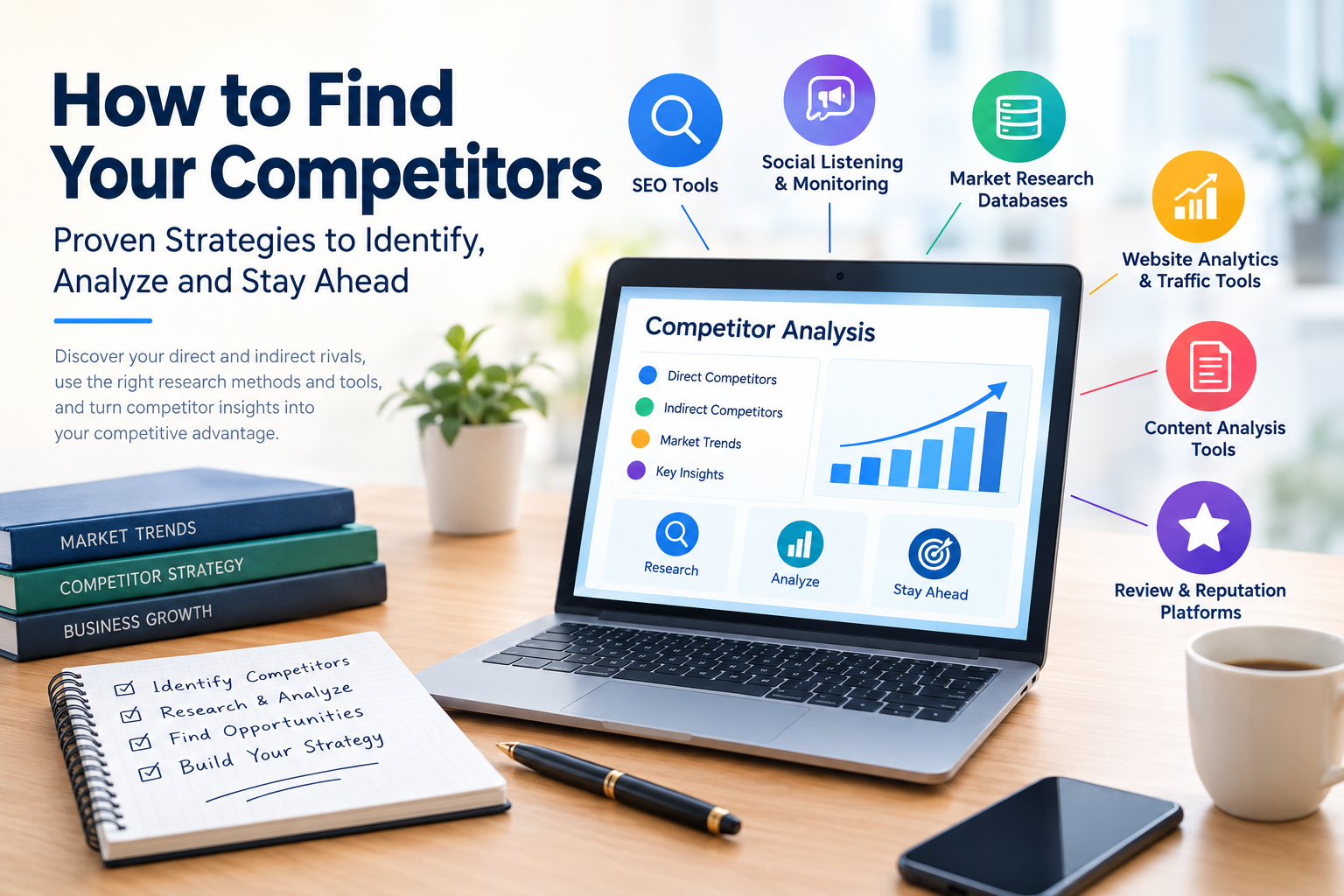
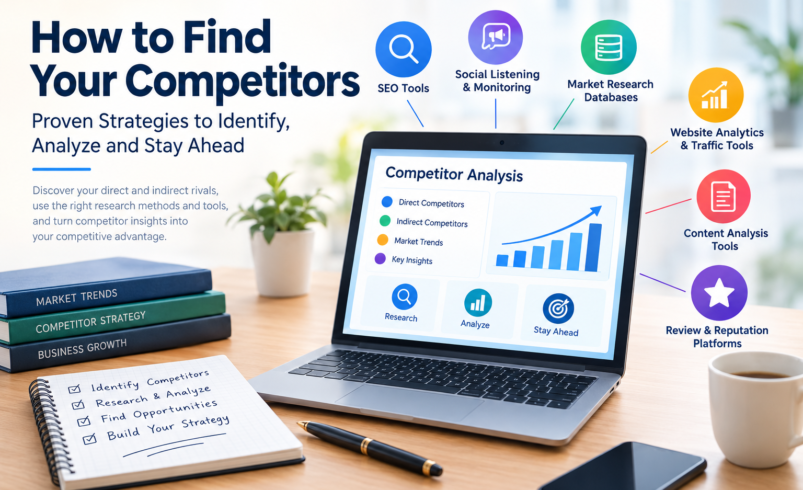
Categories of Tools for Competitor Discovery
To effectively discover and analyze competitors, businesses can leverage various types of tools. These tools automate data collection and provide structured insights, making the process more efficient. While specific product names are not listed, understanding the categories helps in selecting the right resources:
- Search Engine Optimization (SEO) Tools: These help identify competitors by revealing who ranks for target keywords, analyzing backlink profiles, and tracking organic search visibility.
- Social Listening and Monitoring Platforms: These tools track mentions of keywords, brands, and industry topics across social media and the web, often revealing competitors in discussions.
- Market Research Databases: Subscription-based services that provide industry reports, market share data, and competitive intelligence on various sectors.
- Website Analytics and Traffic Estimation Tools: These can provide insights into competitor website traffic, popular pages, and audience demographics, helping to gauge their online presence.
- Content Analysis and Marketing Tools: Used to examine competitor content strategies, identify content gaps, and understand their engagement tactics.
- Review and Reputation Management Platforms: Monitoring these sites can reveal competitors based on customer feedback and comparisons.

1 Comment
-
[…] Mastering Competitor Discovery: How to Find Your […]