



Fundamental Visibility: Is Your Website Indexed?
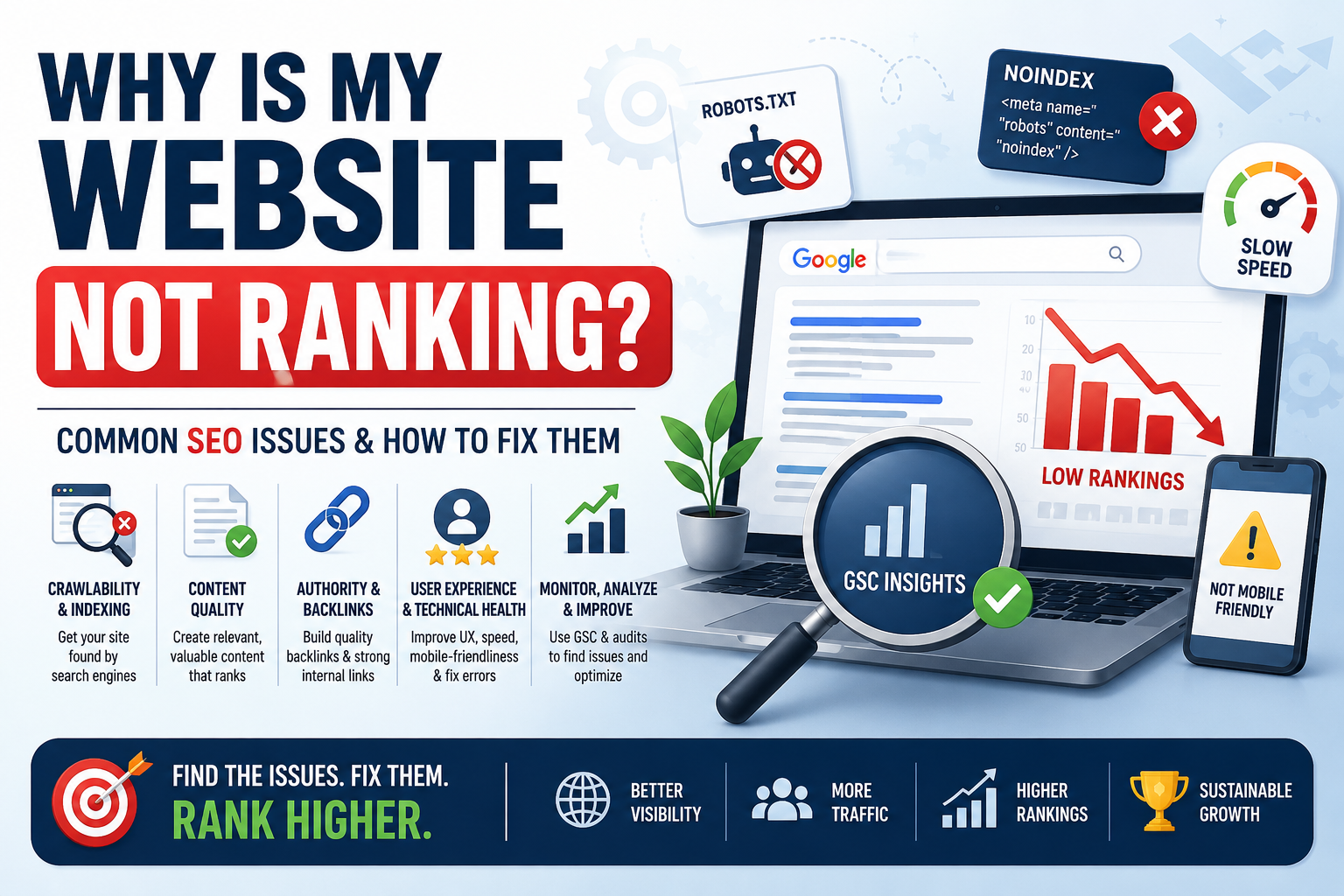
The most basic reason for poor ranking is that search engines haven’t discovered or included your site in their index. If your site isn’t indexed, it cannot appear in search results. This is the first check if you’re wondering why my website is not ranking or why your website not appearing in search results. Ensuring crawlability and indexing is the initial step in figuring out how to get my website on Google.
Crawlability and Indexing Barriers
Technical factors often prevent search engines from accessing and indexing your site, representing common website SEO issues.
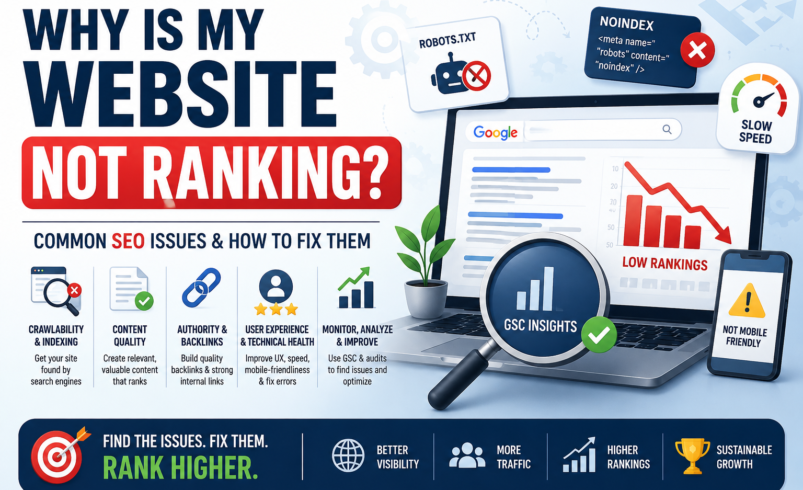
- Robots.txt & ‘Noindex’ Tags: Incorrect
robots.txtdirectives ormeta noindextags can block critical pages. - XML Sitemaps: Missing, outdated, or error-filled sitemaps cause search engines to miss pages.
- GSC Verification: Lack of Google Search Console verification means missing crucial indexing and crawl error insights. These are typical common SEO problems.
- Site Speed & Mobile Responsiveness: Slow loading times and a non-mobile-friendly design indirectly impact crawling and perception. Mobile-friendliness is a significant Google ranking factor. Addressing these is key to how to improve website ranking.
Content Relevance and Quality: The Core of Search Performance
Once indexed, content quality and relevance determine ranking. If your content not ranking, it often points to issues with user intent and search engine guidelines. This is fundamental for how to improve website ranking and a primary Google ranking factor.
Content Quality, Relevance, and Keyword Strategy
Search engines prioritize valuable answers.
- Thin, Duplicate, or Irrelevant Content: Pages with minimal text, identical content, or content that doesn’t match user intent won’t perform, leading to website traffic low. These are common SEO problems.
- Ineffective Keyword Strategy: Targeting overly competitive keywords, ignoring user intent, or keyword stuffing are detrimental. Natural integration is crucial for how to improve website ranking and avoiding website SEO issues.
Website Authority and Backlink Profile
A website’s authority, largely built through backlinks, significantly influences ranking. Backlinks are a critical Google ranking factor and essential for how to improve website ranking.
Backlinks and Internal Linking Structure
- Lack of Quality Backlinks: Reputable backlinks are “votes of confidence.” Without them, your site appears less authoritative, hindering ranking. Low-quality links harm your site and lead to website traffic low.
- Internal Linking Structure: A logical internal linking structure helps search engines discover pages, understand relationships, and distribute “link equity,” addressing website SEO issues.
User Experience and Technical Health
Search engines evaluate user interaction. Positive UX signals value; poor UX hinders ranking. These are broader website SEO issues.
UX, Security, and Technical Errors
- Poor User Experience (UX): High bounce rates, low dwell time, and difficult navigation signal dissatisfaction, negatively impacting Google ranking factors and contributing to website traffic low.
- Security & Technical Errors: Lack of HTTPS, numerous broken links, 404 errors, or frequent server issues create poor UX and signal neglect, clear website SEO issues.
Diagnosing and Addressing Your Ranking Challenges
Understanding why my website is not ranking is the first step. Systematically identify and rectify issues to improve ranking.
Leveraging Google Search Console and SEO Audits
- Google Search Console (GSC): This free tool provides direct insights. Check “Index Coverage” for indexed, excluded, or error pages (crucial if your website not showing up on Google or if you ask why is my website not indexed). Review crawl errors, performance data, and security alerts.
- Comprehensive SEO Audit: A thorough audit reviews technical, on-page, and off-page aspects to uncover hidden common SEO problems and website SEO issues. This includes examining
robots.txt, sitemaps, speed, mobile-friendliness, content quality, keyword usage, and backlink profile.
Frequently Asked Questions About Website Ranking
How long does it typically take for a new website to rank on Google?
New websites often take 6 to 12 months or more to achieve significant rankings, especially in competitive niches. Time varies based on competition, SEO efforts, and content strategy for how to get my website on Google and see it rank.
Can social media activity directly improve my website’s search ranking?
Social media activity doesn’t directly influence Google ranking factors. However, it indirectly helps by increasing brand visibility, driving traffic, and potentially leading to more brand mentions and natural backlinks, all of which can positively impact SEO.
My website was ranking, but now it’s not. What could be the reason?
A sudden drop requires investigation: Google algorithm updates, recent technical changes (which might introduce website SEO issues), new competition, or manual penalties (check GSC). Understanding why my website is not ranking after a drop requires careful investigation.
Moving Forward: Consistent Optimization for Better Ranking
Discovering why my website is not ranking is the essential first step. Ranking well is an ongoing process demanding attention to technical health, quality content, and authority building. Systematically addressing crawlability, content relevance, backlink profiles, and user experience significantly improves ranking chances. Consistent monitoring and adaptation will pave the way for how to improve website ranking and achieve sustainable visibility.