


The Enduring Benefits of Content Marketing
Content marketing is a strategic approach focused on creating and distributing valuable, relevant, and consistent content to attract and retain a clearly defined audience—and, ultimately, to drive profitable customer action. It moves beyond traditional promotional tactics, establishing a brand as a trusted resource. Understanding the fundamental benefits of content marketing is crucial for any organization aiming for sustainable growth and a strong market presence. This approach is not merely about publishing; it’s about building relationships and delivering genuine value.
The Core Mechanics: Content Marketing vs. Traditional Advertising
To appreciate the enduring advantages of content, it helps to examine how it fundamentally contrasts with disruptive, traditional media:
| Dimension | Traditional Outbound Advertising | Strategic Inbound Content Marketing |
| Audience Relationship | Interruptive (pop-ups, TV spots, cold calls) | Permissive and sought out (answers search intent) |
| Shelf Life | Stops delivering the moment ad spend ends | Evergreen; compounds organic value over years |
| Cost Efficiency | Recurring, bid-driven CAC (vulnerable to ad inflation) | Costs ~62% less and generates 3x as many leads (Demand Metric benchmark) |
| Trust & Perception | Often met with banner blindness or ad blockers | Positions the brand as an educator, problem solver, and advisor |
Why Content Marketing is Important for Business Success
Beyond direct advertising, content marketing serves as a foundational element for establishing a robust digital footprint and engaging target audiences effectively. It addresses the evolving consumer journey, where individuals seek information and solutions before making purchasing decisions. This is precisely why content marketing is important for businesses looking to thrive in competitive markets, offering significant content marketing advantages that traditional methods often cannot match.
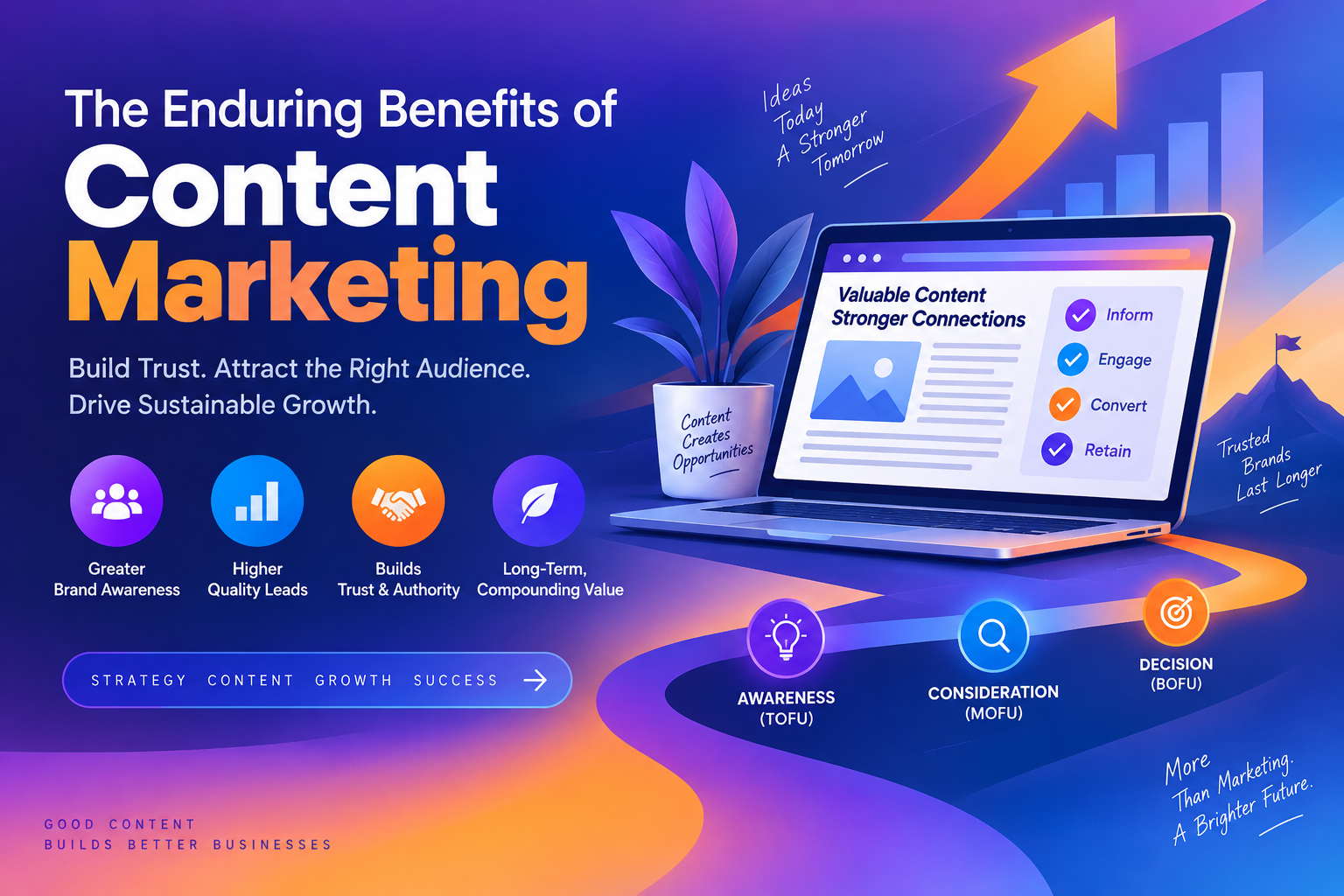
Mapping Content Assets Across the Buyer Journey Funnel
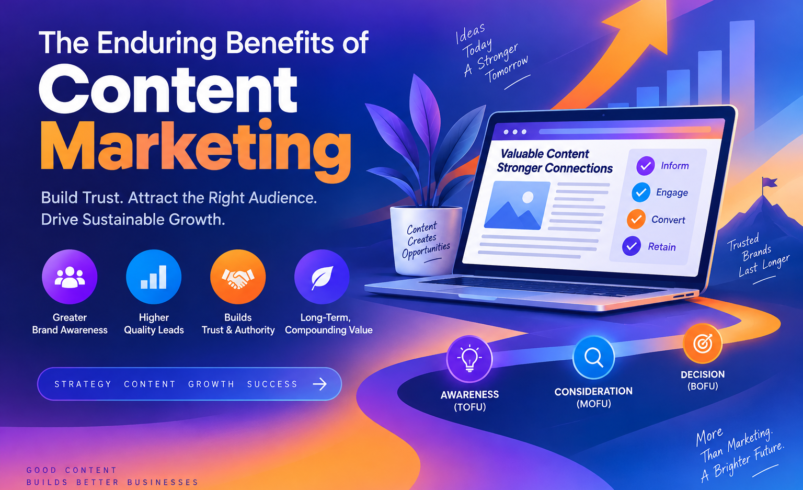
Modern B2B and B2C buyers complete upwards of 60% of their discovery and evaluation process prior to initiating contact with a sales representative. A high-performing content program provides structured value across each lifecycle milestone:
-
Top of Funnel (TOFU – Awareness): Broad educational resources such as comprehensive glossaries, industry trend analysis, introductory guides, and foundational webinars that solve immediate queries and capture early organic search demand.
-
Middle of Funnel (MOFU – Consideration): Evaluative assets including side-by-side comparison tables, objective product teardowns, ROI calculators, and interactive assessment tools that help prospects weigh alternatives.
-
Bottom of Funnel (BOFU – Decision): Verified customer case studies, technical implementation sheets, security and compliance briefs, and live walkthroughs that eliminate buyer hesitation and justify purchase approval.
Building Authority and Thought Leadership
Consistent creation of high-quality, informative content positions a business as an expert and trusted voice in its industry. When a company regularly publishes insightful articles, research, or guides, it demonstrates deep understanding and competence. This fosters credibility with potential customers, who are more likely to trust and engage with brands perceived as leaders in their field.
Aligning Content Strategy with Google’s E-E-A-T Framework
In an era where generative AI allows competitors to flood the web with derivative content, authority is decided by adherence to search engine quality criteria: Experience, Expertise, Authoritativeness, and Trustworthiness (E-E-A-T):
-
Demonstrating First-Hand Experience: Embed genuine proprietary takeaways, internal campaign data, unvarnished post-mortems, and workflow screenshots that cannot be replicated by automated tools.
-
Showcasing Subject-Matter Expertise: Utilize recognized practitioner bylines, complete author bios with industry credentials, and rigorous editorial oversight.
-
Earning Authoritativeness: Secure authoritative digital citations, peer backlinks, and media mentions by releasing original industry surveys, benchmark studies, and proprietary statistical analyses.
-
Cementing Trustworthiness: Maintain clear sourcing, date stamps on all articles, transparent editorial policies, and accessible corporate information across all digital assets.
How Content Marketing Helps Businesses Achieve Key Objectives
Content marketing directly contributes to overarching business goals, from initial awareness to conversion and customer retention. It acts as a versatile tool that supports various stages of the customer lifecycle. Understanding how content marketing helps businesses achieve these objectives reveals its strategic value.
Increasing Brand Awareness and Visibility
Content expands a brand’s reach significantly. By creating optimized content, businesses improve their organic search engine rankings, ensuring their brand is discovered by a wider, relevant audience actively searching for solutions. This direct contribution to increase brand awareness content marketing efforts means more eyes on your brand, leading to greater recognition and recall.
Driving Qualified Lead Generation
Strategically crafted content attracts prospects by addressing their pain points and offering solutions. From educational blog posts to detailed whitepapers, content nurtures individuals through various stages of the sales funnel. This process effectively converts interested visitors into valuable leads, making lead generation through content a core benefit. It ensures that the leads generated are often more qualified, as they have already engaged with the brand’s expertise.
Cultivating Customer Trust and Loyalty
Transparent, helpful, and empathetic content builds rapport with an audience. By consistently providing value without an immediate sales pitch, businesses address customer pain points and demonstrate a genuine commitment to their audience’s success. This approach is fundamental to build customer trust content marketing strategies, fostering long-term relationships and encouraging repeat business and brand advocacy.
The Distribution Playbook: The 50/50 Creation and Amplification Rule
Producing quality assets is only half the battle. A widespread point of failure in content programs is neglecting the distribution architecture. Leading practitioners adhere to a 50/50 balance between production and multi-channel syndication:
-
Search Engine Optimization & Topic Clusters: Anchor foundational pillar content with tightly knit supporting cluster articles connected via strategic internal links, signaling deep topical authority to search engines.
-
Owned Channel Amplification: Distribute new research through segmented email sequences, customer onboarding workflows, and community newsletters.
-
Strategic Repurposing Cadence: Transform a single long-form benchmark report into executive summary slide decks, bite-sized social threads, audio discussions, and video snippets to maximize reach across differing platform preferences.
-
Sales Enablement Integration: Equip direct sales teams with contextual blog posts and technical guides to address specific buyer objections during active deal negotiations.
The Financial Advantage: Content Marketing ROI and Cost-Effectiveness
The economic aspects of content marketing often highlight its long-term value and efficiency compared to many other marketing strategies. Its ability to deliver sustained results makes it a financially sound investment.
Demonstrating a Strong Return on Investment (ROI)
Content marketing delivers measurable returns over time, often outperforming traditional advertising channels in terms of sustained impact and cost efficiency. While initial investment is required, content assets continue to attract traffic and generate leads long after their creation. This compounding effect showcases a strong content marketing ROI, as a single piece of content can yield benefits for months or even years.
A Cost-Effective Marketing Strategy
Content marketing can be more budget-friendly in the long run. Unlike paid advertisements that cease to deliver results once the budget runs out, content assets provide ongoing value. They attract organic traffic, build authority, and nurture leads without continuous ad spend. This makes it a truly cost-effective marketing content approach, especially for businesses seeking sustainable growth without exorbitant recurring costs.
Core Key Performance Indicators (KPIs) to Track Content Marketing ROI
Demonstrating economic impact requires tracking metrics beyond superficial vanity figures (such as basic pageviews and social impressions). High-maturity teams track quantitative performance across three distinct tiers:
| Measurement Category | Primary Metrics | Business Impact |
| Consumption & Engagement | Average engaged time on page, scroll depth, return reader rate | Validates relevance, content quality, and resonance with search intent. |
| Pipeline & Lead Capture | MQL-to-SQL conversion rate, gated asset downloads, assisted conversions | Quantifies how effectively educational assets nurture interest into pipeline. |
| Revenue & Efficiency | Content-attributed pipeline value, Customer Acquisition Cost (CAC) reduction | Proves direct contribution to bottom-line ARR/MRR and capital efficiency. |
Frequently Asked Questions About Content Marketing Benefits
Understanding the practical aspects of content marketing helps businesses better leverage its advantages. Here are answers to common questions regarding the benefits of content marketing and its content marketing advantages.
How long does it typically take to see results from content marketing?
Results from content marketing vary based on industry, competition, and consistency of effort. Generally, businesses can expect to see initial traction in terms of increased traffic and engagement within 3-6 months. Significant impact on lead generation and sales often requires consistent effort over 6-12 months as search engine authority builds and content assets accumulate.
(Note: According to industry research by Ahrefs analyzing millions of pages, only 5.7% of newly published URLs rank in Google’s top 10 within their first year, with the average top-ranking page taking anywhere from two to three years to mature. Sites with higher existing domain rating and topical authority achieve these inflection points considerably faster.)
Is content marketing suitable for all types of businesses?
Yes, content marketing is highly adaptable and beneficial for nearly all business types, from B2B enterprises to small local businesses and e-commerce brands. The key is tailoring content to specific audience needs and business objectives. A B2B company might focus on whitepapers and case studies, while a local restaurant might use blog posts about local ingredients or video recipes.
What types of content are most effective for achieving these benefits?
A range of content types can be effective, and the best choice depends on the audience and objective. Popular and effective formats include:
-
Blog posts and articles for thought leadership and SEO.
-
Videos for engagement and complex explanations.
-
Infographics for data visualization and shareability.
-
Case studies and whitepapers for in-depth analysis and lead generation.
-
Podcasts for audio-based learning and brand personality.
-
Social media posts for community building and quick updates.
The most effective strategy often involves a mix of these, distributed across relevant channels.
How do businesses prevent organic content decay over time?
Content decay happens when older articles gradually drop in rankings and traffic due to shifting search intent, algorithm adjustments, or competitor refreshes. High-performing teams combat this by instituting quarterly content audits, updating out-of-date statistics, refreshing internal links, and re-optimizing high-potential pages that have slipped to positions 5–15 on search engine result pages.
How does content marketing impact paid ad performance?
Content marketing and PPC complement one another. High-performing organic articles identify proven, high-converting topics that can be amplified via paid search and social ads with minimal creative risk. Concurrently, informative landing pages improve Google Ads Quality Scores, which lowers cost-per-click (CPC) bids while providing valuable retargeting audiences built from organic website traffic.
Harnessing the Full Potential of Content Marketing
The strategic benefits of content marketing are clear and far-reaching. From establishing authority and increasing brand visibility to driving qualified leads and fostering deep customer loyalty, content marketing is a foundational element for modern business growth. It offers significant content marketing advantages by providing a sustainable, cost-effective pathway to connect with audiences and achieve measurable business objectives. Recognizing why content marketing is important and committing to a well-executed strategy positions businesses for long-term success and enduring market relevance.
Essential Content Marketing Strategy Implementation Checklist
Before scaling your production workflows, use this operational checklist to ensure every asset is built for sustained search performance and pipeline contribution:
-
[ ] Audience Persona Validation: Ground every topic in real customer friction points sourced directly from sales conversations, support tickets, and community forums.
-
[ ] Search Intent & Keyword Mapping: Match target queries with the proper format (informational, comparative, transactional) to fulfill user expectations.
-
[ ] Original Data & Experience Injection: Include unique primary viewpoints, case studies, proprietary surveys, or real workflows to satisfy Google’s E-E-A-T criteria.
-
[ ] Internal Link Architecture: Connect each new piece into relevant topical clusters, ensuring reciprocal links between pillar pages and supporting guides.
-
[ ] Conversion Mechanism Integration: Incorporate relevant contextual calls-to-action (CTAs), lead magnets, or demo pathways appropriate for the asset’s funnel stage.
-
[ ] Multi-Channel Repurposing Plan: Schedule owned-channel amplification (newsletter, social media snippets, sales enablement assets) concurrently with publication.

