


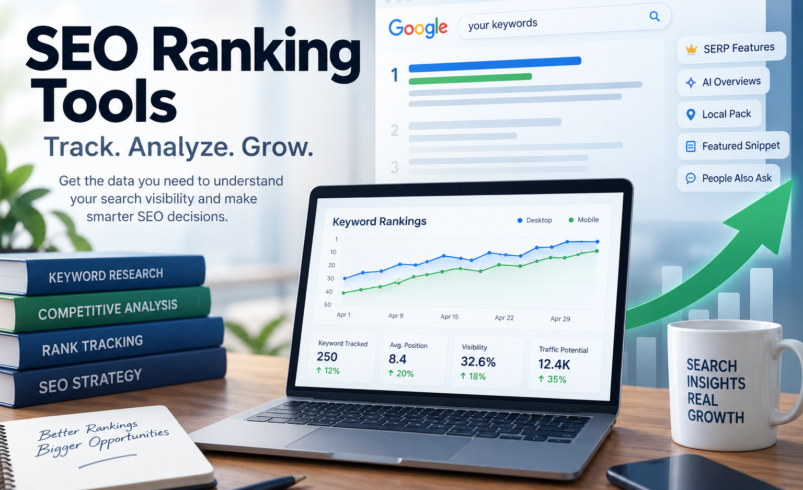

Achieving prominent visibility in search engine results is a cornerstone of successful online presence. Without a clear understanding of where your website stands, optimizing for search engines becomes a speculative endeavor. This is precisely where ranking tools become indispensable. They provide the data necessary to track performance, identify opportunities, and refine your search engine optimization (SEO) strategy. Understanding your website’s position for target keywords is fundamental for competitive analysis and sustained growth. This article explores various SEO ranking tools, their functionalities, and how to select the best options for your specific needs.
What Are Ranking Tools and Why Are They Essential?
Ranking tools are software solutions designed to monitor and report on a website’s position in search engine results pages (SERPs) for specific keywords. Their core function is to track keyword performance and overall site visibility, offering a data-driven perspective on your SEO efforts. Without these tools, assessing the impact of content updates, link building, or technical SEO changes would be largely guesswork.
How Modern Rank Trackers Gather SERP Data
To understand the metrics these platforms generate, it helps to understand their underlying architecture. Ranking software generally gathers SERP positions through one of two technical mechanisms:
- Direct Scraping via Headless Browsers: The tool uses distributed proxy networks to simulate authentic user queries across specific geo-locations and devices, parsing the live HTML code of the search engine result page.
- Direct SERP APIs: Platforms license or query structured search engine API feeds that deliver machine-readable SERP layouts instantly.
Because search engines frequently update their page design, layout classes, and bot-mitigation policies, premier tools invest heavily in maintaining proxy pools and data-normalization pipelines to guarantee position accuracy across desktop and mobile indexes.
Understanding Website Ranking Checker Functionality
A website ranking checker operates by systematically scanning SERPs for a predefined set of keywords and reporting on your domain’s position for each. This functionality allows you to observe fluctuations, identify pages that are gaining or losing visibility, and understand the competitive landscape. The value of this data lies in its ability to provide a clear, quantifiable measure of your website’s performance, enabling informed decisions on how to check website ranking effectively and respond to changes.
First-Party Data vs. Third-Party Trackers: Resolving the Discrepancy
A common frustration among practitioners is encountering discrepancies between Google Search Console (GSC) and a third-party website ranking checker. Understanding why these metrics diverge is crucial for sound reporting:
- Google Search Console (Impressions-Weighted Average): GSC reports the “Average Position” calculated from actual user impressions. If a page ranks position 2 in the United Kingdom and position 42 in the United States, GSC averages these values based on total query impressions. It also aggregates query variations and logs position data dynamically over a trailing rolling window.
- Third-Party SERP Trackers (Point-in-Time Snapshots): Tools like Semrush, Ahrefs, or AccuRanker pull a single, controlled snapshot at a fixed time from a specific IP proxy location, browser viewport, and language setting.
Neither metric is incorrect; GSC reflects aggregated user reality, while rank trackers provide standardized, repeatable baseline benchmarks unaffected by personalization factors.
The Strategic Value of Keyword Ranking Software
Keyword ranking software extends beyond simple position tracking. It helps businesses identify which keywords are driving traffic, monitor changes in those keyword positions over time, and uncover new opportunities for content creation or optimization. By understanding the performance of individual keywords, you can refine your content strategies, prioritize optimization efforts, and allocate resources more effectively to improve search visibility.
Key Features to Look for in Effective Ranking Tools
When evaluating different ranking tools, certain functionalities stand out as critical for robust SEO analysis. These features ensure you receive comprehensive and actionable insights from your SERP tracking tools.
Accurate SERP Tracking and Reporting
The foundation of any good ranking tool is precise and up-to-date SERP tracking. This includes the ability to monitor rankings across different geographical locations, device types (desktop vs. mobile), and even specific search engines. Features like daily updates, historical data retention, and customizable reports are crucial for understanding performance trends and communicating results to stakeholders.
Tracking SERP Features, AI Overviews, and Pixel Depth
Modern SERP tracking extends well beyond classical numerical positions (ranks 1 through 10). The current search environment is heavily populated with complex layouts that push traditional organic listings down the page:
- AI Overviews & Summary Snapshots: Modern search layouts increasingly synthesize multi-source summaries at the very top of organic results, significantly altering click-through distributions.
- Rich SERP Features: Elements such as Featured Snippets, People Also Ask (PAA) blocks, Local 3-Packs, Video Carousels, and Image Packs dictate genuine visual real estate.
- Pixel Rank (Visual Absolute Position): A rank of position 1 that sits 800 pixels below the screen fold under an AI summary and paid advertisements will produce significantly lower click-through rates than an uncluttered position 1. Advanced tools now record true pixel depth to reflect actual searcher visibility.
Competitor Analysis and Opportunity Identification
Top SEO ranking tools offer robust competitor analysis features. They allow you to monitor competitor performance, identify their top-ranking keywords, and analyze their content strategies. This insight can reveal content gaps on your own site, highlight new keyword opportunities, and inform strategies to outperform rivals in search results.
Historical Data and Trend Analysis
Access to historical data is vital for understanding long-term performance trends. Effective ranking tools store past ranking data, allowing you to measure the impact of SEO campaigns over time, identify seasonal trends, and make data-driven decisions based on a comprehensive view of your website’s trajectory.
Keyword Cannibalization and URL Volatility Alerts
An essential, advanced feature inside enterprise rank trackers is automated detection for keyword cannibalization. When two or more URLs from your domain alternate in search results for the same target query, search engines struggle to identify the authoritative destination. Top-tier tools provide dedicated URL drift flags, alerting webmasters whenever a landing page switch occurs so that internal linking or canonicalization can be corrected promptly.
Top Ranking Tools for Diverse SEO Needs
The market offers a variety of ranking tools, each with unique strengths catering to different user segments and objectives.
Comprehensive Comparison of Top Ranking Software
| Tool | Best For | Update Frequency | SERP Feature Tracking | Key Strengths |
| Google Search Console | First-party performance data | Daily (with 2-3 day lag) | Rich Results reports | Direct Google data, click/impression trends, zero cost |
| Semrush | All-in-one marketing workflows | Daily tracking available | Comprehensive (Snippets, Local, AI) | Deep competitor data, keyword difficulty scoring, audit tool suite |
| Ahrefs | Backlink context & organic discovery | Daily or weekly (tier-dependent) | Comprehensive SERP details | Extensive link index, historical SERP positions, share of voice |
| SE Ranking | Agencies & SMB cost efficiency | Daily or on-demand | Full SERP features & local packs | Flexible pricing, white-label client reports, accurate geo-tracking |
| AccuRanker | High-volume, enterprise rank tracking | Real-time / Instant on-demand | Pixel-level tracking & AI elements | Fastest refresh rates, dynamic filtering, enterprise API |
Powerful Google Ranking Tools for Comprehensive Insights
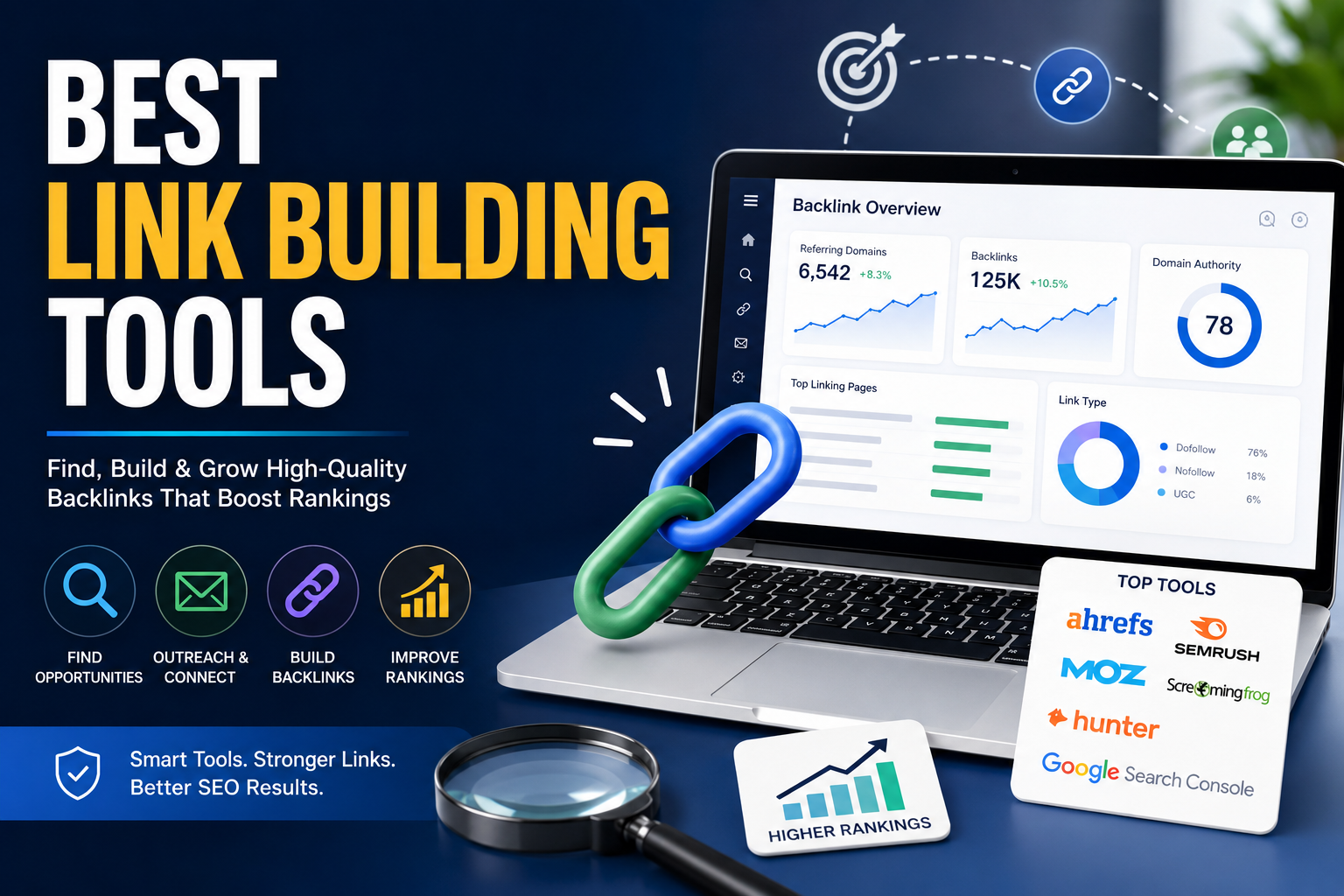
For anyone focused on Google’s search results, Google Search Console is a foundational, free tool that provides direct insights into your site’s performance on Google. It shows which queries bring users to your site, your average position, and any indexing issues. Beyond this, advanced Google ranking tools like Semrush, Ahrefs, and Moz offer extensive data on Google SERPs, allowing you to track thousands of keywords, analyze competitors, and understand how to check website ranking with granular detail.
Best SEO Tools for Small Business Growth
Small businesses often require tools that balance features, ease of use, and affordability. Options like SE Ranking, Serpstat, and even some features within Google Search Console are excellent choices. These platforms provide essential keyword tracking, competitor analysis, and site audit capabilities without the steep learning curve or high cost of enterprise-level solutions, making them the best SEO tools for small business growth.
Effective Free Ranking Tools for Budget-Conscious Users
While professional SEO often necessitates paid subscriptions, several free ranking tools can provide valuable data. Google Search Console, as mentioned, is paramount. Other free options or freemium models from tools like Ubersuggest or SERP Watcher (for limited queries) can serve as a basic website ranking checker, offering insights into a small set of keywords or providing a snapshot of your site’s visibility.
Choosing the Right Ranking Tool: A Practical Buying Guide
Selecting the most appropriate ranking tools requires careful consideration of your specific requirements and objectives for SEO ranking tools.
Assessing Your Budget and Business Size
Your budget and the scale of your operations are primary factors. Small businesses or individual consultants might start with free ranking tools or more affordable subscriptions, gradually scaling up as their needs and budget grow. Enterprise-level organizations will likely require comprehensive platforms that offer extensive data, advanced features, and API access.
Matching Features to Your Specific SEO Goals
Consider your primary SEO goals. If competitive intelligence is key, prioritize tools with strong competitor analysis. For content marketers, robust keyword ranking software and content gap analysis are crucial. If you manage a large portfolio of websites, efficient SERP tracking tools with bulk upload and reporting capabilities will be essential. Aligning the tool’s features with your specific objectives ensures you invest in a solution that genuinely supports your strategy.
Step-by-Step Checklist for Setting Up a Rank Tracking Campaign
To extract reliable data from day one, follow this practical checklist when configuring your tracking environment:
- Segment by Keyword Intent: Group keywords into tags based on purchase stage (Informational, Commercial, Navigational, Transactional).
- Pin Specific Geo-Locations: If your target market is regional, configure city-level or ZIP-level tracking rather than default country-level tracking.
- Split Desktop vs. Mobile Trackers: SERP layouts, sitelinks, and ranks often diverge drastically across devices. Set up dual tracking for target clusters.
- Map Target URLs: Assign expected landing page URLs to each keyword so the system can flag unintended ranking pages or internal cannibalization immediately.
- Establish Competitor Benchmarks: Input at least 3-5 primary domain competitors to generate Share of Voice (SoV) and SERP overlap reports.
- Set Up Automated Shift Alerts: Configure email or Slack alerts triggered when top-tier revenue keywords fall by more than 3 to 5 positions.
FAQ: Common Questions About Ranking Tools
Here are answers to frequently asked questions regarding ranking tools and their application.
What is the most accurate website ranking checker?
Accuracy in a website ranking checker is influenced by factors like data freshness, location specificity, and device type. Tools like Semrush, Ahrefs, and Moz are generally considered highly accurate due to their extensive data collection and sophisticated algorithms. However, no tool can perfectly replicate every user’s unique search experience.
Can I rely solely on free ranking tools for professional SEO?
While free ranking tools offer valuable insights, relying solely on them for professional SEO is often insufficient. Paid SEO ranking tools provide significantly more data, advanced features like competitor analysis, historical tracking, and comprehensive reporting, which are critical for developing and executing effective, data-driven strategies.
How often should I check my website ranking?
The frequency for how to check website ranking depends on your SEO activity and goals. For active campaigns, daily or weekly checks are advisable to monitor immediate impacts. For more stable sites, monthly reviews might suffice. Most professional tools offer automated daily tracking and reporting.
Do Google ranking tools differ from other SEO ranking tools?
Yes, Google ranking tools like Google Search Console are proprietary tools provided directly by Google, offering first-party data on how Google sees and ranks your site. Other SEO ranking tools (third-party platforms) use their own data collection methods and algorithms to estimate rankings and provide broader competitive and keyword research insights across various search engines, not just Google.
Why do my rankings drop during core search algorithm updates?
During core search update rollouts, search engines continuously adjust ranking weights, content evaluation criteria, and layout classifications over several weeks. Rank checkers will record heightened volatility as data centers sync worldwide. It is best practice to avoid making hasty structural changes while an algorithm rollout is actively unfolding; instead, monitor position trends until volatility scores stabilize across the wider industry.
What does “Share of Voice” (SoV) mean in rank tracking tools?
Share of Voice is an aggregate visibility metric that calculates the percentage of total search traffic a domain wins for a specific tracked keyword set. Unlike an arithmetic average rank, SoV weights positions against estimated search volume and standard click-through rates (CTR). This prevents low-volume tail keywords from distorting your overall visibility score.
Conclusion:
Empowering Your SEO with the Right Ranking Tools
Ranking tools are not merely data providers; they are strategic assets that empower you to monitor, optimize, and significantly improve your search engine performance. From understanding individual keyword positions to conducting in-depth competitor analysis, these tools offer the clarity needed to navigate the complexities of search engine optimization. Selecting the right suite of SEO ranking tools is a strategic decision that directly impacts your ability to achieve online visibility, attract target audiences, and sustain growth. Consistent use and analysis of the data provided by these tools are paramount for ongoing SEO success.