
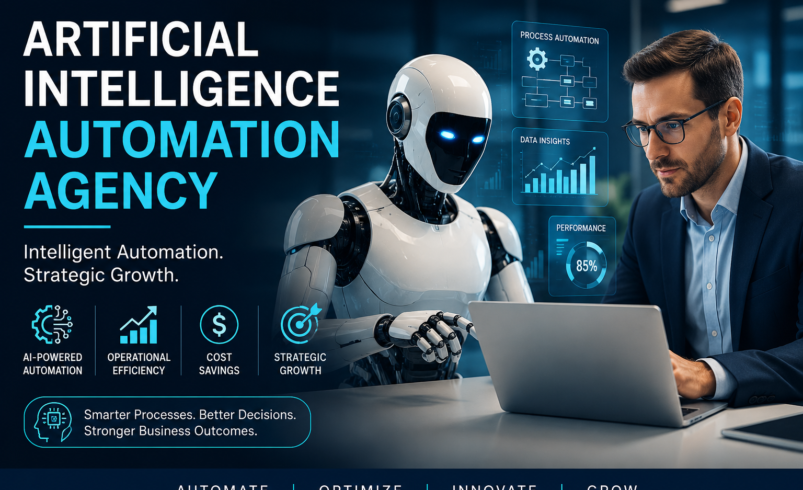

Businesses constantly seek methods to enhance productivity and foster innovation. The integration of artificial intelligence (AI) into operational workflows represents a significant advancement. An artificial intelligence automation agency specializes in guiding organizations through this transformation, leveraging AI to streamline processes, reduce costs, and unlock new capabilities. These agencies provide the expertise necessary to navigate the complexities of AI adoption, ensuring that businesses can effectively harness its potential for sustained growth.
Understanding the Artificial Intelligence Automation Agency
An artificial intelligence automation agency is a specialized firm dedicated to helping businesses integrate AI technologies to automate tasks and optimize operations. Its core mission involves identifying areas where AI can deliver the most impact, designing tailored solutions, and overseeing their implementation. These agencies combine deep technical knowledge of AI with a strategic understanding of business processes, acting as crucial partners for companies aiming to modernize their infrastructure and competitive edge.
Beyond Basic Automation: The AI Difference
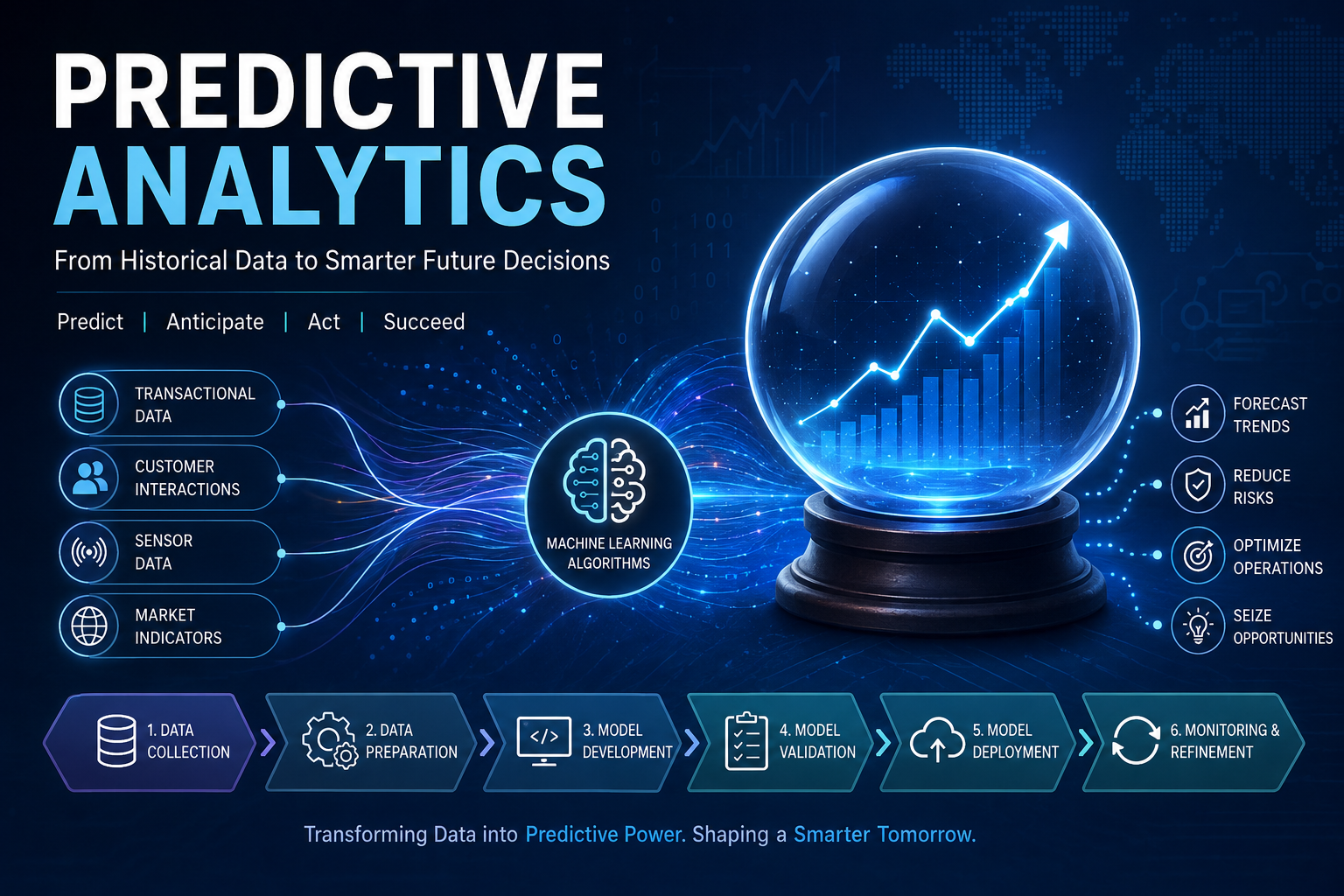
Traditional automation often relies on predefined rules and repetitive tasks. While effective for certain functions, it lacks adaptability. AI elevates this by introducing intelligence, enabling systems to learn from data, make decisions, and adapt to changing conditions. This is particularly evident in business process automation AI, where AI-driven tools can handle complex scenarios, interpret unstructured data, and even predict outcomes. For example, AI can automate customer service interactions with natural language processing, optimize supply chains through predictive analytics, or enhance data entry accuracy with intelligent document processing, moving beyond simple robotic process automation (RPA) to cognitive automation.
Traditional RPA vs. Intelligent AI Automation: Key Distinctions
To understand how an AI automation agency elevates operational infrastructure, it helps to compare standard Robotic Process Automation (RPA) directly with cognitive AI systems:
| Feature / Dimension | Traditional RPA | Cognitive AI Automation |
| Underlying Mechanism | Fixed, logic-based “if-then” scripts | Machine learning models, LLMs, neural networks |
| Data Handled | Strictly structured data (spreadsheets, standardized forms) | Unstructured & semi-structured data (freeform emails, PDFs, audio, messy tickets) |
| Adaptability & Learning | Breaks when an interface or data schema changes | Dynamically adapts, self-heals, and infers user intent |
| Decision-Making | Deterministic (repeats pre-programmed paths) | Probabilistic (evaluates context, weighs confidence, recommends/executes decisions) |
| Agency Implementation | Script setup and macro configuration | Model fine-tuning, vector database retrieval (RAG), and agentic workflow orchestration |
Tangible Benefits of AI Automation for Businesses
Partnering with an artificial intelligence automation agency offers numerous advantages. The benefits of AI automation extend across various business functions, leading to measurable improvements in efficiency, cost savings, and strategic positioning. These advantages are not merely theoretical; they translate into concrete outcomes that impact a company’s bottom line and market responsiveness.
Boosting Operational Efficiency with AI
One primary advantage is the significant boost in operational efficiency. AI for operational efficiency involves deploying AI tools to streamline workflows, eliminate manual errors, and optimize resource allocation. This can manifest in automated data analysis, predictive maintenance schedules for equipment, or intelligent inventory management systems that reduce waste. By automating routine and complex tasks, employees are freed from mundane work, allowing them to focus on higher-value activities that require human creativity and critical thinking. This leads to faster processing times, reduced operational costs, and a more agile business environment.
Strategic Growth Through AI Implementation
Beyond efficiency, AI implementation for businesses is a powerful driver of strategic growth. AI provides deeper insights from vast datasets, enabling more informed decision-making in areas like market analysis, product development, and customer targeting. Predictive analytics can identify emerging trends or potential risks, allowing businesses to adapt proactively. Furthermore, AI can personalize customer experiences at scale, leading to increased satisfaction and loyalty. By leveraging AI, companies can innovate faster, develop new services, and gain a significant competitive advantage, opening new avenues for revenue and market expansion.
Real-World Use Cases: Where AI Automation Delivers Measurable ROI
Across varied business departments, automation agencies build end-to-end operational systems that translate directly into quantifiable gains:
- Customer Service & Retention: Multi-agent support pipelines resolve up to 60-70% of tier-1 support tickets automatically by pulling verified answers from vector databases, passing only edge cases with complete conversational summaries to human specialists.
- Finance & Invoice Processing: Intelligent Document Processing (IDP) agents ingest mismatched vendor invoices across multiple formats, cross-verify line items against enterprise ERP databases, reconcile discrepancies, and route payments without manual data entry.
- Sales Pipeline & Lead Qualification: Autonomous outbound agents monitor incoming web inquiries 24/7, enrich lead contact data via external intelligence APIs, evaluate buy intent, and schedule qualified discovery calls directly into executive calendars.
- Supply Chain & Inventory Management: Predictive models synthesize real-time vendor shipping delays, weather patterns, and historical seasonal demand to trigger reorder points automatically, preventing costly stock outs and warehouse overstocking.
Core Services of an AI Solutions Provider
An effective AI solutions provider offers a comprehensive suite of automation agency services designed to support businesses at every stage of their AI journey. These services typically span from initial strategy development to ongoing maintenance and optimization, ensuring that AI investments yield maximum returns.
Comprehensive AI Consulting Services and Strategy Development
AI consulting services help businesses assess their processes, identify areas for improvement, and find where AI can add value. Experts then create a clear AI strategy with goals, resources, and an implementation plan aligned with business objectives.
Tailored AI Implementation for Enterprise and Small Business
Once the strategy is set, the agency implements custom AI solutions, integrates them with existing systems, prepares data infrastructure, trains teams, and monitors performance to ensure effective results.
The Modern Agency Tech Stack & Architecture
A reliable AI automation partner does not rely on siloed, off-the-shelf bots; they architect interconnected systems built on robust modern tooling:
- Workflow Orchestration & Integration: Platforms such as Make.com, n8n, and custom webhook architectures that tie existing SaaS platforms (CRMs, ERPs, databases) into automated sequences.
- Cognitive Engines & LLMs: Frontier foundation models (OpenAI, Anthropic Claude, open-weights models like Llama) connected via secure API infrastructure.
- Context & Retrieval-Augmented Generation : Vector databases (Pinecone, Weaviate, Qdrant) that store and index proprietary internal company documentation, giving AI agents grounded, hallucination-resistant access to company knowledge.
Enterprise Data Security, Privacy, and Model Governance
One of the most critical responsibilities of an artificial intelligence automation agency is safeguarding proprietary corporate data. Without strict technical governance, businesses risk data exposure, regulatory non-compliance, and unexpected operational liabilities. Top-tier agencies implement several layers of defense:
- Model Isolation: Ensuring all connected LLM APIs operate under strict enterprise agreements where customer data and prompts are excluded from foundation model training sets.
- PII Redaction & Sanitization: Automatically stripping personally identifiable information (PII), payment card industry (PCI) data, and proprietary credentials through data sanitization layers before queries are processed.
- Role-Based Access Control (RBAC): Restricting agent access so that AI systems can only retrieve documents and execute tasks appropriate to the specific permissions of the querying employee.
- Audit Logging & Fallbacks: Maintaining human-in-the-loop (HITL) checkpoints for high-stakes decisions, accompanied by real-time latency, token budget, and error-rate monitoring dashboards.
Selecting the Ideal Artificial Intelligence Automation Agency
Choose an artificial intelligence automation agency with proven experience, AI expertise, strong security, and reliable support.
Partner Evaluation Checklist: Key Questions to Ask an Agency
Before committing to a partnership, interview prospective AI automation agencies using this vetting framework:
Data Usage: Do your API integrations use commercial zero-retention enterprise tiers to guarantee our proprietary company data is never used to train base models?
IP Ownership: Will our company own 100% of the custom code, agent workflows, proprietary vector indexes, and fine-tuned model weights upon project completion?
Architecture Longevity: Are workflows built using open standards and adaptable frameworks, or locked into a proprietary agency black-box system?
Ongoing Maintenance & Drift: What is your protocol for tracking token consumption, API version deprecations, and model drift over time?
Measurable Success Metrics: How do you baseline productivity before deployment, and what specific KPIs will demonstrate positive ROI at 30, 60, and 90 days?
Frequently Asked Questions About artificial intelligence automation agency
What is the typical ROI for AI automation?
Return on investment varies significantly based on the specific AI solution, industry, and initial investment. However, many businesses report substantial gains in efficiency, cost reduction, and revenue growth within 12-24 months. A good agency will help project potential ROI during the strategy phase.
How long does AI implementation usually take?
Implementation timelines depend on the complexity and scope of the project. Simple automations might take weeks, while comprehensive enterprise-wide AI transformations can span several months to over a year. Phased approaches are common to deliver value incrementally.
Is AI automation suitable for small businesses?
Yes. Small businesses can use AI automation for tasks like customer support, marketing, and data analysis without needing a large budget.
What data is needed for AI automation agency?
AI models require data to learn and operate. The type and volume of data depend on the specific application. Agencies often assist in identifying, collecting, cleaning, and preparing relevant datasets, ensuring data quality and compliance.
What is the difference between an AI SaaS tool and an AI automation agency?
An AI SaaS tool provides ready-made features that businesses configure themselves, while an AI automation agency builds and manages customized AI solutions tailored to a company’s specific workflows and systems.
How do agencies manage ongoing operational costs like API token fees?
AI agencies manage ongoing costs through support fees and variable AI usage charges. They estimate token usage and use tools like caching, model routing, and usage limits to help control expenses and avoid unexpected costs.
Transforming Your Business with an Expert AI Automation Agency
Partnering with an expert AI automation agency helps businesses modernize operations, improve decision-making, and streamline AI adoption with expert strategy, implementation, and optimization.